
Nigeria’s 2026 Fiscal Policy Measures
Introduction on The Full Breakdown of Tariffs, Import Bans, Excise Duties & Green Tax
Nigeria has introduced sweeping changes to its trade and fiscal system with the release of the 2026 Fiscal Policy Measures, effective from 1st April 2026.
Announced by the Honourable Minister of Finance, Wale Edun, and approved under the administration of Bola Ahmed Tinubu, has approved the implementation of the Nigeria’s 2026 fiscal policy measures made up of Supplementary Measures (SPM) Mmade up of the ECOWAS Common External Tariff (CET) 2022 – 2027. This policy update represents one of the most significant economic shifts in recent years.
From new tariffs and import bans to excise duties and environmental taxes, these changes will directly affect:
- Importers
- Manufacturers
- Exporters
- Freight forwarders
- Nigerian businesses at large
👉 Note: If you deal with international trade, this policy will impact your costs, pricing, and profit margins.
Overview of the Nigeria’s 2026 Fiscal Policy Measures
The policy aligns with the ECOWAS Common External Tariff (CET) 2022–2027 and introduces major updates across multiple sectors.
Key Highlights:
- 192 tariff lines now attract additional Import Adjustment Tax (IAT)
- 17 items banned from import outside ECOWAS
- 127 tariff lines enjoy reduced import duties
- New excise duties on beverages, alcohol, and tobacco
- Introduction of a Green Tax Surcharge
- Addition of rPET waste to export prohibition list
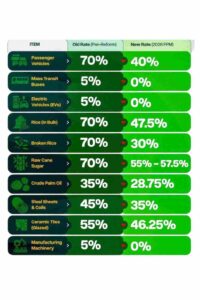
Official source:
Federal Ministry of Finance → https://www.finance.gov.ng
Import Adjustment Tax (IAT): Major Cost Impact for Importers
The biggest change comes from the introduction of IAT on 192 product categories.
This means importers will now pay:
👉 ECOWAS CET Duty + Additional IAT Levy
High-Impact Items Affected
| Item | HS Code | CET Duty | IAT | Total Tariff |
|---|---|---|---|---|
| Rice (bulk) | 1006.30.10.00 | 10% | 37.5% | 47.5% |
| Wheat Flour | 1101.00.00.00 | 20% | 50% | 70% |
| Crude Palm Oil | 1511.10.00.00 | 10% | 18.75% | 28.75% |
| Raw Sugar | 1701.12.00.00 | 20% | 37.5% | 57.5% |
| Salt | 2501.00.20.00 | 10% | 45% | 55% |
| Cement Clinker | 2523.10.00.00 | 10% | 40% | 50% |
👉 This will significantly increase the landed cost of goods in Nigeria.
Long-Term Plan
From January 2027, IAT will gradually reduce annually until it reaches 0% by 2036, aligning with AfCFTA commitments.
Import Prohibition List (Annex II)
The government has placed a ban on 17 specific goods imported from non-ECOWAS countries.
This policy is designed to:
- Protect local industries
- Encourage regional trade
- Reduce dependence on foreign imports
National List (Annex III): Reduced Duties for Growth Sectors
Not all changes are negative.
A total of 127 tariff lines now enjoy reduced import duties, targeting:
- Agriculture
- Healthcare
- Manufacturing
- Digital economy
👉 This creates opportunities for businesses willing to adapt and reposition.
Excise Duties & Green Tax Surcharge
New fiscal measures also affect consumption and environmental policies.
Effective Dates:
- 1st April 2026 → Policy begins
- 1st July 2026 → Full enforcement (after 90-day grace period)
Affected Products:
- Non-alcoholic beverages
- Alcoholic drinks
- Cigarettes and tobacco
Additionally, a new Green Tax Surcharge will apply to selected goods.
👉 These measures will increase production costs and retail prices across multiple industries.
Export Prohibition: rPET Waste Ban
Waste Polyethylene Terephthalate (rPET) has been added to Nigeria’s export prohibition list.
This move supports:
- Local recycling industries
- Environmental sustainability
- Circular economy development
Grace Period for Existing Import Transactions
Importers with existing Form ‘M’ opened before 1st April 2026 are given:
👉 90 days to clear goods under old rates
After that:
- All new transactions must comply with the new tariff structure
Who Is Most Affected?
These policy changes will impact:
- Food importers (rice, sugar, flour)
- Plastic and packaging businesses
- Construction companies
- Beverage and tobacco companies
- Freight forwarders and clearing agents
What This Means for Nigerian Importers & Businesses
The 2026 fiscal policy introduces:
- Higher import costs
- Increased compliance requirements
- Greater need for strategic planning
👉 Businesses that fail to adapt will struggle with pricing and profitability.
How to Prepare for the 2026 Fiscal Policy Changes
To stay ahead:
1. Review Your HS Codes
Ensure your products are correctly classified.
2. Recalculate Landed Costs
Work with professionals to avoid surprises.
3. Plan Inventory Strategically
Use the grace period wisely.
4. Explore Local Alternatives
Reduce dependency on high-tariff imports.
5. Work With Experienced Logistics Partners
This is where expertise matters.
How Bowagate Global Ltd Can Help
At Bowagate Global Ltd, we help Nigerian businesses navigate complex import regulations and changing policies.
We provide:
- Accurate tariff classification
- Efficient customs clearance
- Cost optimization strategies
- End-to-end freight solutions
👉 In times like this, working with the right logistics partner can save you millions.
READ ALSO: HOW TO CALCULATE CUSTOMS DUTY CHARGES AND VAT IN NIGERIA
Conclusion
The 2026 Fiscal Policy Measures mark a major shift in Nigeria’s economic and trade direction.
From increased tariffs to environmental taxes, the message is clear:
👉 Adapt quickly or risk falling behind.
Businesses that understand these changes early and adjust their strategies will gain a significant competitive advantage.
If you import goods into Nigeria and want to avoid costly mistakes under the new policy, Let Bowagate Global Ltd handle your logistics, customs clearance, and compliance.